Why it matters
Moisture under your home starts in the ground.
The soil is wet, the air above it is warm, and the house sits in between. This page shows what happens.
The source
The ground is not dry.
Soil under a crawlspace holds water from the water table and from rain that soaks in beside the foundation. Uncovered, it evaporates continuously, and a sheet over the ground stops most of it.1
Watch it work
What the ground puts into the air, and what takes it back out.
Each dot is water vapor. Bare soil, then a barrier, then a barrier with a dehumidifier, which is the code's R409.5.1 option. The figures under the graphic are measured, and each names its source.
Bare soil under a house evaporates about 400 grams of water per square meter a day. Under 1,000 square feet that is roughly 10 gallons a day, rising into the joists.1
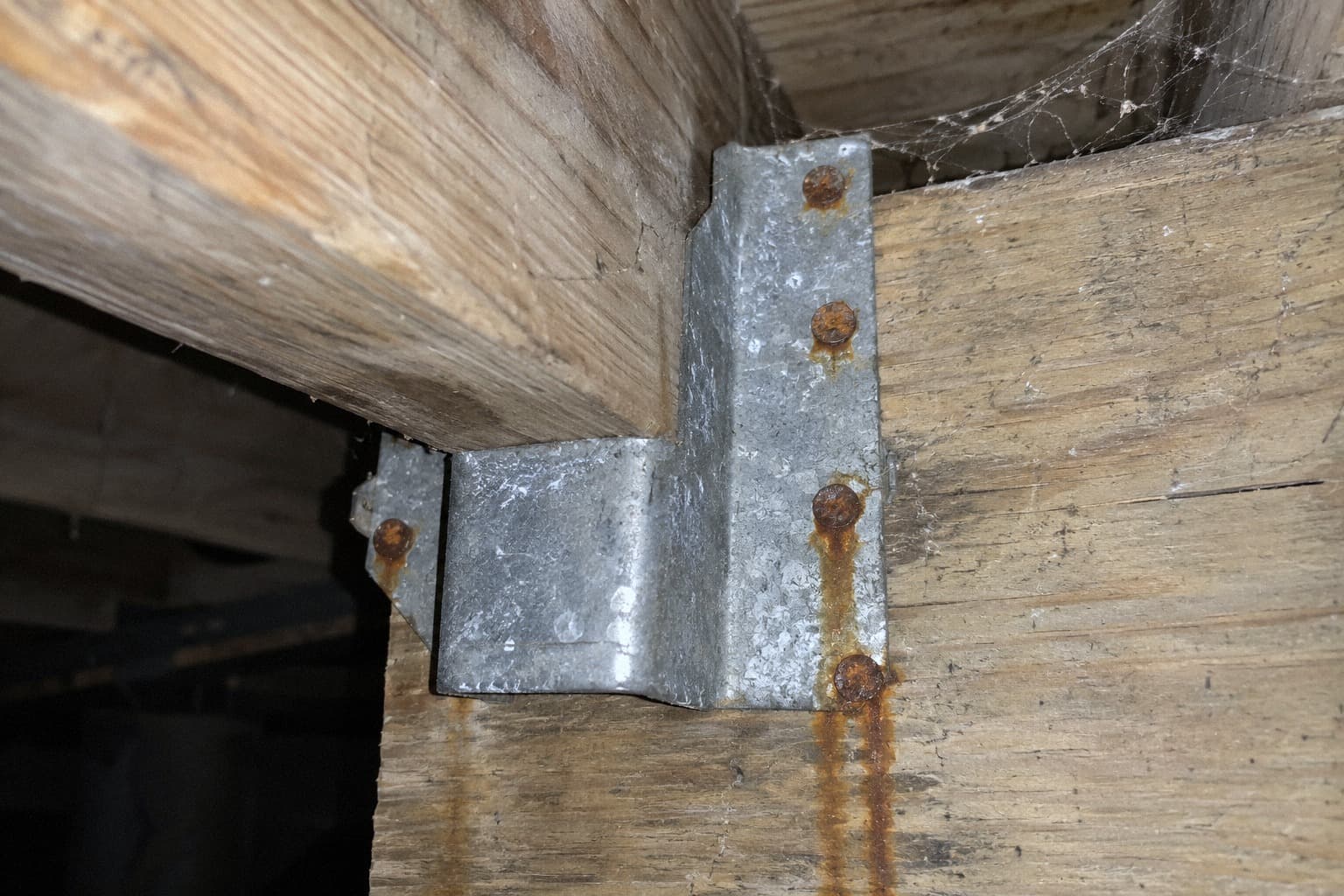 Rust on a joist hangerIllustration
The cost
What it costs to leave it.
No dollar figure appears here, because none could be traced to a primary source. The mechanism is the part worth knowing: moisture moves into wood, into fasteners and into the air, and each of those has a price.
Free inspection
Book your free inspection.
About an hour under the house, then one fixed price. Texts are answered right away.